

Heat pumps: are they worth it?
after one year with a Heat Pump, Professor Nick Bailey Shares his experience with us and answers the big question: “Is it really worth it?”
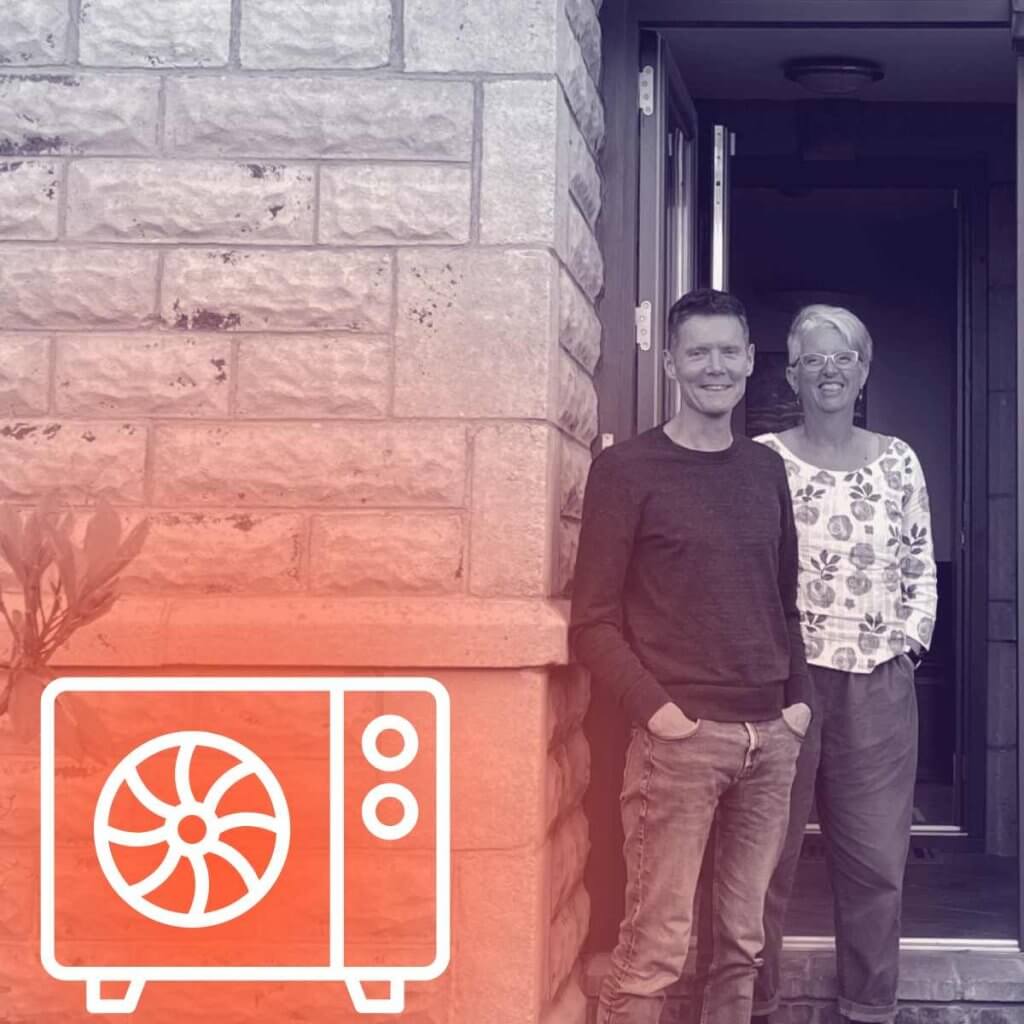
We made the move off gas just over a year ago. The combi boiler had come to the end of its life and it seemed crazy to put a new one in. So we took the plunge and replaced it with a heat pump.
Was it worth it? And would I recommend it to others? Well, maybe it depends what matters to you: is it comfort, costs or carbon?
For us, it was all three.

Comfort
Above all, we all want a heating system that keeps us warm. In general, our gas
boiler did that. When it was cold, we ran the heating for an hour or so first thing and
then had it on for a few hours in the evening. The system ran at a high temperature
so things warmed up pretty quickly. But the house also cooled down quite a lot at
night so some rooms could be a bit cold on a winter’s morning.
The heat pump runs more continuously, trickling heat into the house – a bit less at
night because we like it cooler for sleeping, a bit more in the day. But a much more
even temperature overall. Making the first cup of tea on a winter’s morning is
definitely more pleasant!

Costs
Costs were also important for us. Everyone knows that electricity costs more per unit
(kWh) than gas. Standard rate electricity on our tariff just now is 27.7p per unit while
gas would be 6.3p per unit – 4.4 times as much!
But that is offset by the massively greater efficiency of the heat pump. For each unit
of gas you pay for, you only get about 0.9 units back in heat (at best) – the rest goes
out of the flue. For each unit of electricity going into the heat pump, we are getting
back 4.0 units of heat – three free units for each unit we pay for because the heat
pump harvests heat from the surrounding air. (I know, it seems a bit like magic!) So
the heat pump is 4.4 times as efficient as the gas boiler (4.0 divided by 0.9 is 4.4) –
which cancels out the higher unit price.
In fact, we do much better than that. Heat pump tariffs like Octopus Cosy charge
much less in off peak periods, providing incentives to shift demand away from the
evening peak hours. We run the heating a bit harder in the afternoon cheap period
and do all our hot water then, and reduce it a bit in the early evening. As a result, the
average cost we paid for a unit of electricity was about 16% cheaper than the
standard rate over the last year. For us, that translates to a saving of about £200 a
year.

Carbon
Our third reason for making the change was the desire to reduce our carbon
footprint. With gas, every 1000 units produce 200 kg of C02. With our current annual
heating and hot water use at 16,700 kWh (and allowing for the gas boiler’s
inefficiency), we would be producing about 3.8 tonnes of CO2 a year.
In the UK, the electricity grid gets cleaner every year as more power is generated by
wind and solar. On the latest available figures, 1000 units of electricity produced
about 180 kg of CO2. But we don’t need nearly as much energy because of the heat
pump’s great efficiency – just 4200 kWh. So on an annual basis, the heat pump
would produce 0.75 tonnes of CO2 – a reduction of 80%.
In fact, it did much, much better than that. We live in the Southern Scotland region of
the grid where renewables make up a much larger proportion of generation. On
average, in the hours we were using electricity, our average carbon intensity was 9
times lower than the UK average – just 20 kg of CO2 per 1000 units!
That translates to an annual total of just 90 kg of CO2 for all of our heating and hot water – 98% less than with gas, and saving 3.7 tonnes of CO2 a year.
So…was it worth it?
All three of things – comfort, costs and carbon – mattered to us. And for all of them, the heat pump has delivered.
There’s no way we would go back.
ABOUT THE AUTHOR:
Nick Bailey is a Professor of Urban Studies, based in the School of Social and Political Sciences at the University of Glasgow.
Nick is interested in how neighbourhoods shape our lives and how divisions between richer and poorer areas within the city are created and maintained. He is also interested in broader issues of poverty and social exclusion.
Nick also advises on increasing Loco Home’s impact through research and innovation.
Read more Nick’s journey in an earlier case study.